What is the Spanish Digital Nomad Visa?
A residence route for remote employees, professionals and business owners who live in Spain while keeping work mainly outside Spain. An in-Spain filing can grant a three-year residence permit.
Who qualifies?
You show stable income of about €2,849 a month with 12 monthly payments, mainly foreign work, an established payer, at least three months of prior relationship, a degree or three years of experience, a clean criminal record and, on the employment route, zero-copayment health insurance (freelancers sign a commitment to register with RETA instead).
What income do I need for the Spain Digital Nomad Visa in 2026?
About €2,849 a month with 12 monthly payments for the main applicant. Add about €1,068 a month for the first family member, usually a spouse or partner, and €356 a month for each additional family member. Contracts, invoices and matching bank statements need to show that income.
How do I apply for the Spain Digital Nomad Visa?
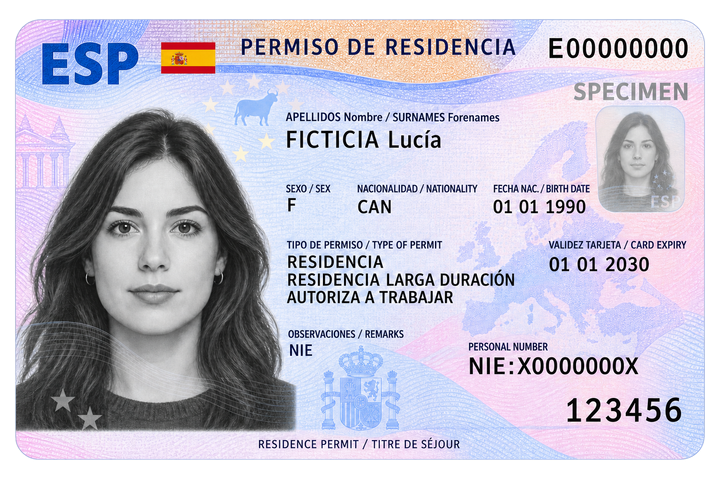
We first review the work relationship, income, client mix and qualification, then build the evidence, forms and sworn translations into one dossier. The residence application is filed online with UGE-CE while you are legally present in Spain. After approval you complete biometrics and the TIE residence card. We do not handle consular filings for this route.
Can I work for Spanish clients on the Digital Nomad Visa?
Independent professionals can take up to 20% of their professional activity from Spanish clients. Employees work for a non-Spanish employer. If more than 20% of your work comes from Spanish clients, we check another route before you file.
How long is the permit valid, and can it be renewed?
A filing made from inside Spain during a lawful stay can grant a residence permit of up to three years. Renewal has its own conditions, which we map after approval. Continuous residence can open long-term residence after five years when the absence limits and renewal conditions stay satisfied.
How long does the application take?
Plan about two to two and a half months end to end. The authority review window is up to 20 working days after a complete filing; preparation, appointments and the TIE sit outside that window.
Can my family come?
Yes. Spouse or partner and children can apply together or join later, with added financial proof calculated from the family size.
Do I need to be in Spain to apply?
Yes. Relovisa files the Spain Digital Nomad Visa only from inside Spain through UGE-CE, while you are legally present, for example on a tourist entry or as a resident, for a residence authorisation of up to three years. We do not handle consular filings for this route.
Can I apply at a Spanish consulate instead of filing inside Spain?
The law allows both. A consulate in your country of residence or citizenship issues a one-year national visa, which you later convert to the residence card in Spain; plan at least four to five months. Filing inside Spain with UGE-CE takes about 2 to 2.5 months to the card and starts with a three-year authorisation. Relovisa files only the in-Spain route.
Do I need a long-term rental before filing?
Not for the initial Digital Nomad filing. Temporary accommodation can support the move while you organise the longer-term address after the residence decision.
What documents are required?
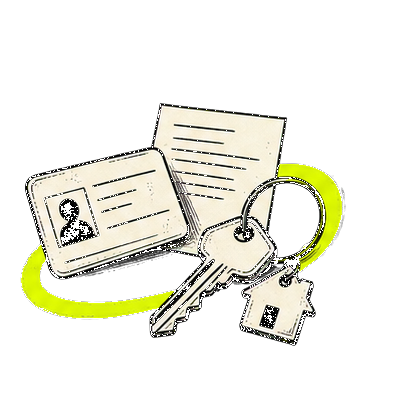
Passport, criminal record, zero-copayment private health insurance if you are an employee (freelancers file a commitment to register with RETA, Spanish self-employed social security, instead), income and work evidence, the employer or business history, professional qualification and remote-work permission.
Why do Spain Digital Nomad applications get refused?
Four patterns recur in 2026: health insurance with a copayment or from an insurer not authorised in Spain on the employment route, income below €2,849 a month or deposits that do not trace to the employer or clients, documents without a valid apostille or sworn translation, and a payer under one year old or a relationship shorter than three months. A criminal record older than three months at filing is also rejected.
How much does the route cost?
The Essential package is €2,490 and All-Inclusive is €3,900, plus €990 per family member. Government fees, insurance, apostilles and translations are separate.
Can I use the Beckham Law on the Digital Nomad Visa?
Yes if you work as an employee of a foreign company: Article 93 of the Spanish income tax law names employees holding the international telework visa. Ordinary freelancers (autónomos) invoicing foreign clients do not qualify, because Article 113.2 of the tax regulation (RD 439/2007) limits the regime to ENISA-certified entrepreneurial activity, services to certified startups and training or R&D. The regime taxes employment income at 24% up to €600,000 for the year of arrival and the five following years, and you must not have been Spanish tax resident in the previous five years.
When does the Beckham Law actually save money?
It covers income tax only; social security is still due. At a €60,000 salary it comes out close to ordinary Spanish tax, and the gap grows with income, to roughly €8,000 a year at €100,000. It also keeps most foreign investment income outside Spanish tax. Modelo 149 must be filed within six months of your Spanish social security registration, with no extension. Compare IFICI and the Beckham Law
Do I need an A1 certificate or Spanish social security registration?
It depends on the employer. An EU or EFTA employer issues an A1 certificate. A non-EU employer needs a certificate under a bilateral agreement with Spain, such as Russia's. Without one, the employer registers in Spain with the TGSS, the work moves to a service contract with RETA registration, or an EU employer-of-record issues the A1. A private policy never replaces this coverage.
What does the freelancer route cost in social security?
Freelancers register as autónomos in RETA after approval and pay contributions themselves: usually about €80 a month in the first year on the tarifa plana, then €200 to €590 a month by net income. Freelancers cannot elect the Beckham regime, so income tax follows the general 19% to 47% scale. Register within about three months of approval.
How does Spain compare with Portugal?
Spain has a lower income floor than Portugal D8 and an in-Spain three-year permit. Portugal D8 has no Spanish-client percentage rule. Portugal D3 can fit skilled employment through a local employer or payroll company.
Where can I compare every Spain route?
Use the Spain country overview to compare Digital Nomad, Startup and Non-Lucrative by income, work rights, filing channel and initial duration.

 Portugal
 Spain
 France
 United Kingdom
 Germany
 Italy
 United States
 Hungary